Scale Pan-India Industries: Lock your EBITDA floor and decouple from ₹20Cr–₹200Cr.

medinfluence
medinfluence
  • Home
  • The FDL Protocol
  • Blueprint
  • DECOUPLED
  • Industries
  • Healthcare EBITDA
  • Industries Challenges
  • LIfe Science Challenges
  • Whitepapers
  • Contact Us
  • Head Hunter
  • Whitepaper 1
  • Whtie Paper 2
  • FDL-FAQ
  • More
    • Home
    • The FDL Protocol
    • Blueprint
    • DECOUPLED
    • Industries
    • Healthcare EBITDA
    • Industries Challenges
    • LIfe Science Challenges
    • Whitepapers
    • Contact Us
    • Head Hunter
    • Whitepaper 1
    • Whtie Paper 2
    • FDL-FAQ
  • Sign In
  • Create Account

  • Bookings
  • My Account
  • Signed in as:

  • filler@godaddy.com


  • Bookings
  • My Account
  • Sign out

Signed in as:

filler@godaddy.com

  • Home
  • The FDL Protocol
  • Blueprint
  • DECOUPLED
  • Industries
  • Healthcare EBITDA
  • Industries Challenges
  • LIfe Science Challenges
  • Whitepapers
  • Contact Us
  • Head Hunter
  • Whitepaper 1
  • Whtie Paper 2
  • FDL-FAQ

Account

  • Bookings
  • My Account
  • Sign out

  • Sign In
  • Bookings
  • My Account

Healthcare EBITDA Architects

EBITDA Growth for Pharma & Hospitals

Lucknow, Uttar Pradesh & Pan India Strategic EBITDA Transformation

Healthcare, hospital, pharmaceutical, and nutraceutical enterprises no longer scale through conventional operations alone. 

Predictable EBITDA growth now demands strategic operational intelligence, founder-level decision architecture, execution precision, and scalable performance ecosystems.

At Medinfluence, we architect high-performance business transformation for healthcare and pharmaceutical enterprises across Lucknow and pan India — converting operational complexity into scalable profitability through advanced business restructuring, leadership optimization, and EBITDA-focused growth systems.

ebitda-optimization-for-enterprises

Strategic EBITDA Transformation Concept

Healthcare, hospital, pharmaceutical, and nutraceutical enterprises often face operational inefficiencies, leadership dependency, execution inconsistency, revenue stagnation, and hidden EBITDA leakages that restrict scalable growth and profitability. 

Sustainable transformation requires strategic operational intelligence, business process reengineering, execution precision, and performance-driven organizational architecture. 

strategic-business-transformation

How Medinfluence Executes It?

 Medinfluence transforms fragmented business ecosystems into scalable, EBITDA-focused performance organizations through founder decision optimization, operational restructuring, accountability alignment, execution intelligence systems, revenue acceleration frameworks, and scalable business process architecture engineered for long-term profitability and institutional growth. 

The Neuro-Economic ROI Protocol

founder-decision-intelligence

The Biochemistry of EBITDA: Solving the Founder Bottleneck

 High Founder Decision Load (FDL) acts as a physiological "Margin Leak." In the Medinfluence framework, we architect systems that transition leadership from cortisol-driven survival to serotonin-backed scaling. 

Strategic Connect

6 Core Gaps Driving Director Decision Load & EBITDA Erosion

1. Excessive Operational Involvement

3. Role Overlap & Accountability Confusion

1. Excessive Operational Involvement

Directors and founders become trapped in day-to-day execution, reducing strategic focus, slowing decision velocity, and weakening organizational scalability.

2. Founder Dependency Trap

3. Role Overlap & Accountability Confusion

1. Excessive Operational Involvement

Critical business functions remain excessively dependent on the founder, creating execution bottlenecks, delayed approvals, and institutional instability. 

3. Role Overlap & Accountability Confusion

3. Role Overlap & Accountability Confusion

3. Role Overlap & Accountability Confusion

Undefined responsibilities and overlapping authority structures lead to duplicated efforts, execution conflicts, and reduced operational efficiency. 

4. Informal System Dependency

6. Limited Real-Time Visibility

3. Role Overlap & Accountability Confusion

Enterprises operating on verbal coordination, informal workflows, and non-standardized processes face inconsistency, operational leakages, and scalability limitations. 

5. Functional Silos

6. Limited Real-Time Visibility

6. Limited Real-Time Visibility

Departments operating independently without strategic integration create communication gaps, fragmented execution, delayed outcomes, and profitability erosion. 

6. Limited Real-Time Visibility

6. Limited Real-Time Visibility

6. Limited Real-Time Visibility

Lack of structured reporting systems, KPI dashboards, and operational visibility restricts leadership decision intelligence and delays corrective action. 

1. Cortisol: The Executive Dysfunction Tax

Gaps: Operational Involvement | Dependency Trap

  •  The Science: Chronic Cortisol atrophies the prefrontal cortex—the seat of strategic ROI—while over-stimulating the amygdala’s "fight-or-flight" response.
  • The EBITDA Impact: You lose the ability to distinguish "tactical noise" from "strategic signal," leading to Reactive Capital Allocation and high-burn firefighting.

neuroperformance-and-cortisol

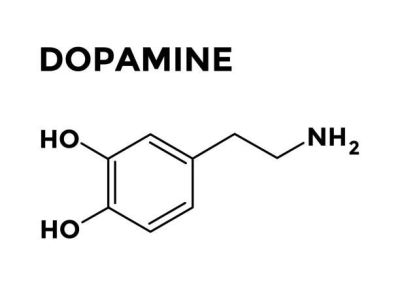
2. Dopamine: The "Busy-Work" Addiction

Gaps: Role Overlap | Informal Systems

  • The Science: Solving low-level crises triggers a Dopamine hit, neurologically incentivizing the Founder to maintain "Operational Friction" to feel a sense of utility.
  • The EBITDA Impact: Growth plateaus as the leader becomes biologically addicted to Systemic Stagnation, masking a lack of high-yield scalable wins.
brain-performance-optimization

3. Serotonin: The Authority Deficit

Gaps: Functional Silos | Zero Visibility

  • The Science: Low Serotonin correlates with decreased impulse control and heightened organizational anxiety. The Founder operates from a "Scarcity Mindset."
  • The EBITDA Impact: Manifests as Micromanagement Friction. Lack of cross-departmental trust leads to wage leakage and turnover—the silent killers of net profit.

serotonin-and-emotional-balance

The EBITDA Architect Protocol

healthcare-operational-intelligence

The 2035 Healthcare Performance Continuum

 To achieve sustainable growth by 2035, healthcare leaders must transition from manual oversight to Systemic Orchestration. 

The objective is to decouple revenue from the Founder Decision Load (FDL), ensuring that EBITDA is driven by architectural efficiency rather than individual heroics. 

hospital-ebitda-transformation

Hospitals: High-Acuity Command Centers

 The 2035 hospital is a hyper-specialized "Surgical Hub" that operates with the precision of an aerospace command center. 

By migrating low-complexity care to virtual "Hospital-at-Home" models, physical facilities are reclaimed for high-margin, high-acuity interventions. 

This is the era of Autonomous Governance, where AI-driven "Care Engineering" protocols eliminate the tactical noise that fuels Founder Decision Load. 

By automating the triage of human and capital resources, you decouple operational success from leadership bandwidth, transforming the hospital from a legacy cost-center into a high-yield engine of clinical excellence. 

pharmaceutical-growth-architecture

Pharmaceuticals: The Molecular Premium Tier

The "Blockbuster" drug era is dead, replaced by the Ultra-Premium curative model. In 2035, value is extracted through "Bio-Individual" medicine—therapies engineered at the gene level for a specific patient’s signature. 

This transition requires a pivot to Decision Intelligence in R&D, using AI-Omics to compress development cycles and eliminate underperforming assets with cold, data-driven conviction. 

By focusing on curative outcomes rather than chronic management, firms command superior pricing power and an elite EBITDA multiple, fueled by the velocity of a lean, high-intent portfolio. 

predictable-growth-for-medtech

Medical Devices: Intelligent Bio-Sensing Ecosystems

Medical devices have evolved from "passive hardware" to "active intelligence nodes.

" The 2035 device sector is the structural spine of the healthcare continuum, providing the real-time biological feedback necessary for precision dosing and surgical accuracy. 

The commercial opportunity lies in the shift from one-time unit sales to High-Margin Insight Subscriptions. 

By embedding devices into a closed-loop data ecosystem, you create a recurring revenue model that is self-optimizing. 

This reduces the Founder’s need to monitor market volatility, as the system generates its own demand through continuous, data-backed utility. 
nutraceutical-growth-architecture

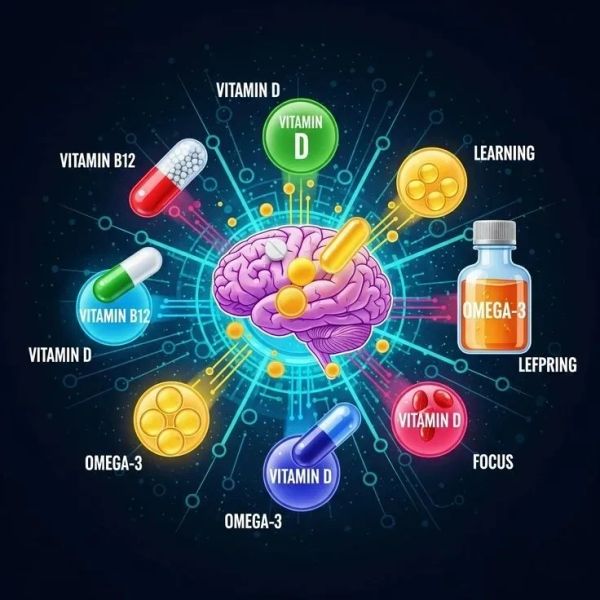
Nutraceuticals: Data-Driven Performance Engineering

Nutraceuticals are no longer a "wellness" accessory; they are a mandatory performance intervention. 

By 2035, the market is dominated by data-linked longevity protocols that utilize DNA and microbiome profiling to optimize human capital. 

This is "Ultra-Premium" nutrition—where generic vitamins are replaced by personalized, bio-active compounds. 

By transitioning from transactional retail to a Subscription-to-Performance model, you achieve a 3x increase in Customer Lifetime Value (CLV). 

The result is a business that scales on the strength of its predictive algorithms rather than the Founder’s marketing intuition. 

The Medinfluence Edge

 We do not just consult on the future; we architect the Execution Systems that allow you to own it. By aligning these four pillars under a unified ROI Architect Protocol, we ensure your enterprise is built for the 2035 reality: where precision is the only path to premium profit. 

Scale With Clarity

MSME Scale Demands Structural Leadership

msme-founder-decision-fatigue-ebitda-growth-india

The 20 Crore Frontier: Engineering India’s Industrial Mittelstand

 In the contemporary Indian economic landscape, the journey toward Viksit Bharat 2047 is anchored by the evolution of our Micro, Small, and Medium Enterprises (MSMEs). 

For an organization reaching the 20 Crore (Cr) turnover milestone, the challenge is no longer just about survival; it is about the structural transition from a founder-led "Micro" entity to a systems-driven "Small-Scale" industry. 

This transition is currently occurring within a volatile global environment defined by Geo-Economic Fragmentation (GEF), where localized trade realignments are replacing traditional globalization. 

At this critical revenue threshold, the primary bottleneck to strategic resilience is the Founder Decision Load (FDL)—a cognitive state where executive volume exceeds the leader's capacity, leading to decision fatigue and "Founder Denial". 

Start Scaling

Frequently Asked Questions (FAQ)

1. Why is the 20 Crore turnover mark considered a "bottleneck" for Indian founders?

3. What is the "Dead Stock Zombie" and how does it affect 20 Cr manufacturing units?

1. Why is the 20 Crore turnover mark considered a "bottleneck" for Indian founders?

The 20 Crore mark represents the transition from a "Micro" to a "Small" enterprise. At this stage, the informal, centralized management style creates a cognitive overload known as Founder Decision Load (FDL). This leads to decision fatigue and "Founder Denial," where the leader ignores data-driven market signals in favor of gut instinct, halting growth.

2. How does high FDL specifically lead to recruitment losses?

3. What is the "Dead Stock Zombie" and how does it affect 20 Cr manufacturing units?

1. Why is the 20 Crore turnover mark considered a "bottleneck" for Indian founders?

 High FDL causes a "centralized hiring bottleneck" where the founder acts as the final arbiter for every role. This slows the "speed of hire," causing top-tier candidates to drop off. Consequently, firms often "fast hire" ill-fitted staff out of desperation, leading to attrition rates as high as 28.7% and replacement costs up to 200% of a salary. 

3. What is the "Dead Stock Zombie" and how does it affect 20 Cr manufacturing units?

3. What is the "Dead Stock Zombie" and how does it affect 20 Cr manufacturing units?

3. What is the "Dead Stock Zombie" and how does it affect 20 Cr manufacturing units?

Dead stock refers to unsellable inventory resulting from "gut instinct" production rather than demand forecasting. It acts as a "zombie" that devours up to 11% of an organization's total revenue. In India, every 1 Crore of dead stock results in a hidden loss of roughly 12 Lakhs per year in interest and storage costs alone.

4. Why is medical inflation more damaging to 20 Cr hospitals than large chains?

6. What factors do investors prioritize in listed Indian SMEs during economic uncertainty?

3. What is the "Dead Stock Zombie" and how does it affect 20 Cr manufacturing units?

Medical inflation in India is running between 11.5% and 14%, significantly higher than general inflation. Small 20 Cr hospitals spend approximately 10.5% of their budgets on supplies but lack the bargaining power of large chains to negotiate volume discounts. This leads to a 40% lower revenue per bed (ARPOB) and a severe "financial load".

5. How does price misalignment stifle innovation in the Indian Pharmaceutical sector?

6. What factors do investors prioritize in listed Indian SMEs during economic uncertainty?

6. What factors do investors prioritize in listed Indian SMEs during economic uncertainty?

Price misalignment is driven by intermediaries who capture nearly one-third of net spending. A major gap exists where drug list prices rise by 12% annually, but net prices received by manufacturers grow by only 3%. This means the producer's actual financial returns do not keep pace with market value, reducing capital available for R&D.

6. What factors do investors prioritize in listed Indian SMEs during economic uncertainty?

6. What factors do investors prioritize in listed Indian SMEs during economic uncertainty?

6. What factors do investors prioritize in listed Indian SMEs during economic uncertainty?

During periods of high market uncertainty, stock returns often decouple from simple sales growth. Investors instead reward operational efficiency and a strong liquidity position (Current Ratio) as signals of management quality and resilience. Firms that have institutionalized systems and reduced FDL tend to maintain higher investor confidence.   

  • Home
  • DECOUPLED
  • Industries
  • Healthcare EBITDA
  • Industries Challenges
  • LIfe Science Challenges
  • Whitepapers
  • Contact Us
  • Whitepaper 1

Medinfluence

T-2/101, Eldico Eternia, Sitapur Road, Near Madiyanva Police Station Lucknow-226021 Uttar Pradesh

+91 9828134199

Copyright © 2026 medinfluence.in - All Rights Reserved.

Powered by GoDaddy

This website uses cookies.

We use cookies to analyze website traffic and optimize your website experience. By accepting our use of cookies, your data will be aggregated with all other user data.

DeclineAccept

Announcement

Founder decision clarity for 

Jaipur Jewellery and Healthcare 

Reach Us